A few weeks ago, I came across something that stopped me scrolling.
Someone claimed that Abu Dharr (may Allah be pleased with him), one of the Prophet Muhammad’s ﷺ companions, was autistic.
As the mother of an autistic child, I immediately understood why that idea was spreading.
Who wouldn’t want to believe that one of Islam’s greatest personalities shared something in common with our children?
I won’t lie.
Part of me wanted it to be true too.
So I started reading.
Along the way, I found an article by Dr. Nur Arif Jasmin, a PhD candidate in Qur’an and Sunnah Studies at the International Islamic University Malaysia (IIUM), who is also autistic himself.
His article didn’t dismiss autistic people.
It simply asked a careful question:
Do we actually have enough evidence to say Abu Dharr (RA) was autistic?
After reading his work, I realised the conversation wasn’t really about autism.
It was about being honest with history.
Sometimes We Want History to Comfort Us
As parents, we naturally look for examples.
If our children struggle socially, we look for someone who struggled.
If they think differently, we hope history contains someone who thought differently too.
There’s nothing wrong with that.
But wanting representation shouldn’t lead us to conclusions that the evidence cannot support.
One of the biggest takeaways from Dr. Nur Arif’s article was surprisingly simple.
Modern autism isn’t diagnosed from personality traits alone.
Being blunt.
Being honest.
Preferring solitude.
Holding firm convictions.
None of these, by themselves, make someone autistic.
Clinical diagnosis involves developmental history, behavioural assessment, and understanding how those characteristics affect everyday life.
None of that information exists for someone who lived over 1,400 years ago.
Which means any diagnosis today would be speculation rather than evidence.
Looking at History Through the Right Lens
Dr. Nur Arif also reminded readers that historical behaviour should first be understood within its own context.
For example, Abu Dharr’s famous disagreement with Bilal (RA) is sometimes presented as proof that he lacked a social filter.
Yet the Prophet ﷺ explained the incident himself.
He described it as a remaining trace of Jahiliyyah, not as a neurological condition.
Likewise, Abu Dharr’s straightforward personality reflected, at least in part, the culture he came from.
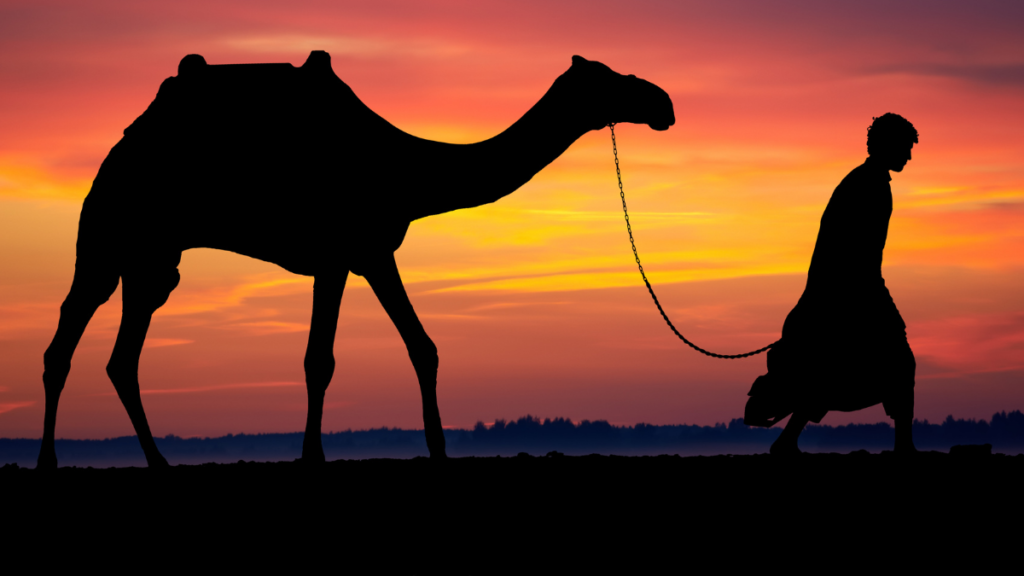
The Bedouin tribes of Arabia were well known for speaking directly and sometimes harshly.
Without understanding that background, it’s easy to interpret ancient behaviour using modern assumptions.
A Good Person Isn’t Good at Everything
Another part of the article challenged something I had never really thought about.
The Prophet ﷺ advised Abu Dharr not to seek positions of leadership.
Some people have interpreted that as evidence of a disability.
But classical scholars understood it differently.
Administration requires diplomacy, negotiation, patience with difficult personalities, and political wisdom.
A person can be deeply righteous while not being the best choice for public office.
In fact, many of us probably know wonderful people who would make terrible managers.
That’s simply how Allah creates us.
Different strengths.
Different responsibilities.
This Doesn’t Change How I See Autism
Reading Dr. Nur Arif’s article didn’t make me feel discouraged.
Quite the opposite.
It reminded me that autistic people don’t need history to invent heroes.
Islam already gives every believer dignity.
Our value has never depended on whether a famous historical figure happened to share our neurology.
Many autistic people possess qualities that Islam greatly honours.
Honesty.
Deep sincerity.
Loyalty.
Persistence.
Remarkable attention to detail.
When these qualities are guided by faith, they become beautiful acts of worship.
The Lesson I Took Home
When I closed the article, I realised something.
Perhaps the more meaningful question isn’t,
“Was Abu Dharr (RA) autistic?”
Perhaps it’s this.
“What can my family learn from Abu Dharr’s courage, sincerity, and devotion to Allah?”
That question doesn’t require certainty about his neurology.
It only requires certainty about his character.
And alhamdulillah, history has already given us plenty of that.
This reflection was inspired by an article written by Dr. Nur Arif Jasmin, a PhD candidate in Qur’an and Sunnah Studies at the International Islamic University Malaysia (IIUM). I am grateful for his thoughtful discussion, which encouraged me to reflect more carefully on this topic as a parent of an autistic child. Any shortcomings in this summary or reflection are entirely my own.